How to start a shop class for kids
A practical guide to tools, safety, teaching, projects, and getting started.
Here’s where to start
You know how to use tools. Maybe you're a woodworker, tradesperson, teacher, veteran, or just someone who's spent years building things. You've thought about teaching kids those skills, and maybe even turning it into a business.
But knowing how to build something and knowing how to run a shop class are two different things.
What tools do you need? How many kids can you teach at once? What should you charge? Where do you find students? And how do you keep a room full of kids working safely without doing everything for them?
I had those same questions when I started VoSKILL in West Palm Beach, Florida. I've learned a lot by running classes, making mistakes, changing things, and figuring out what actually works.
Start Small. You Don't Need a Shop Full of Tools.
One of the easiest mistakes is buying equipment before you know what you actually need.
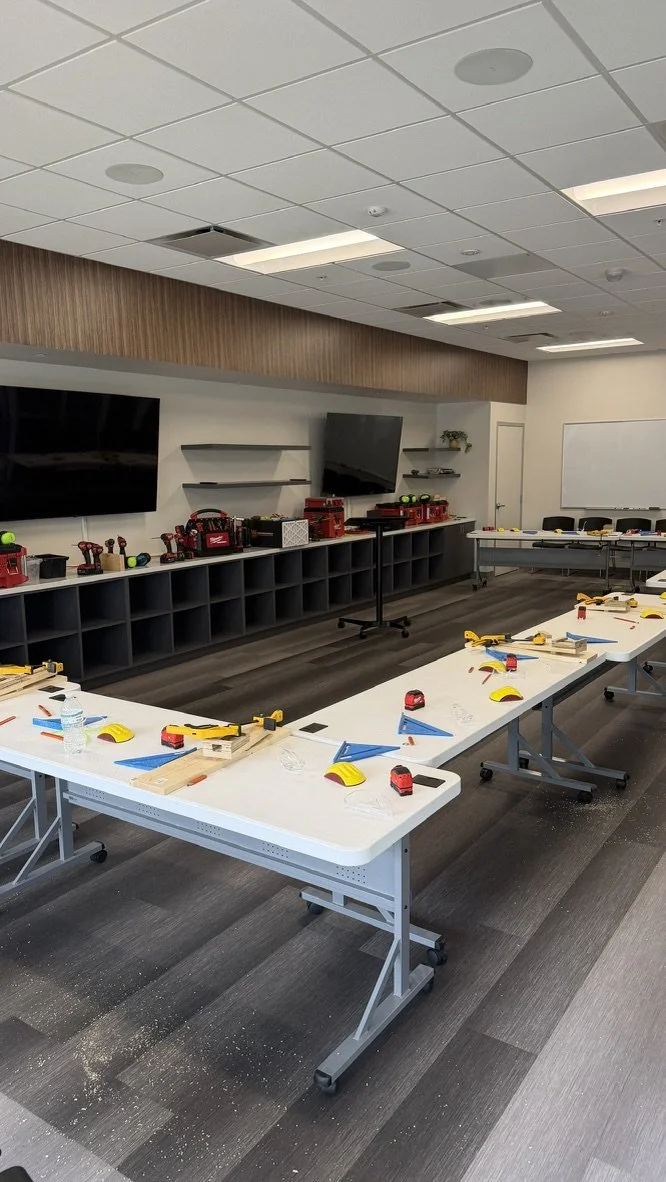
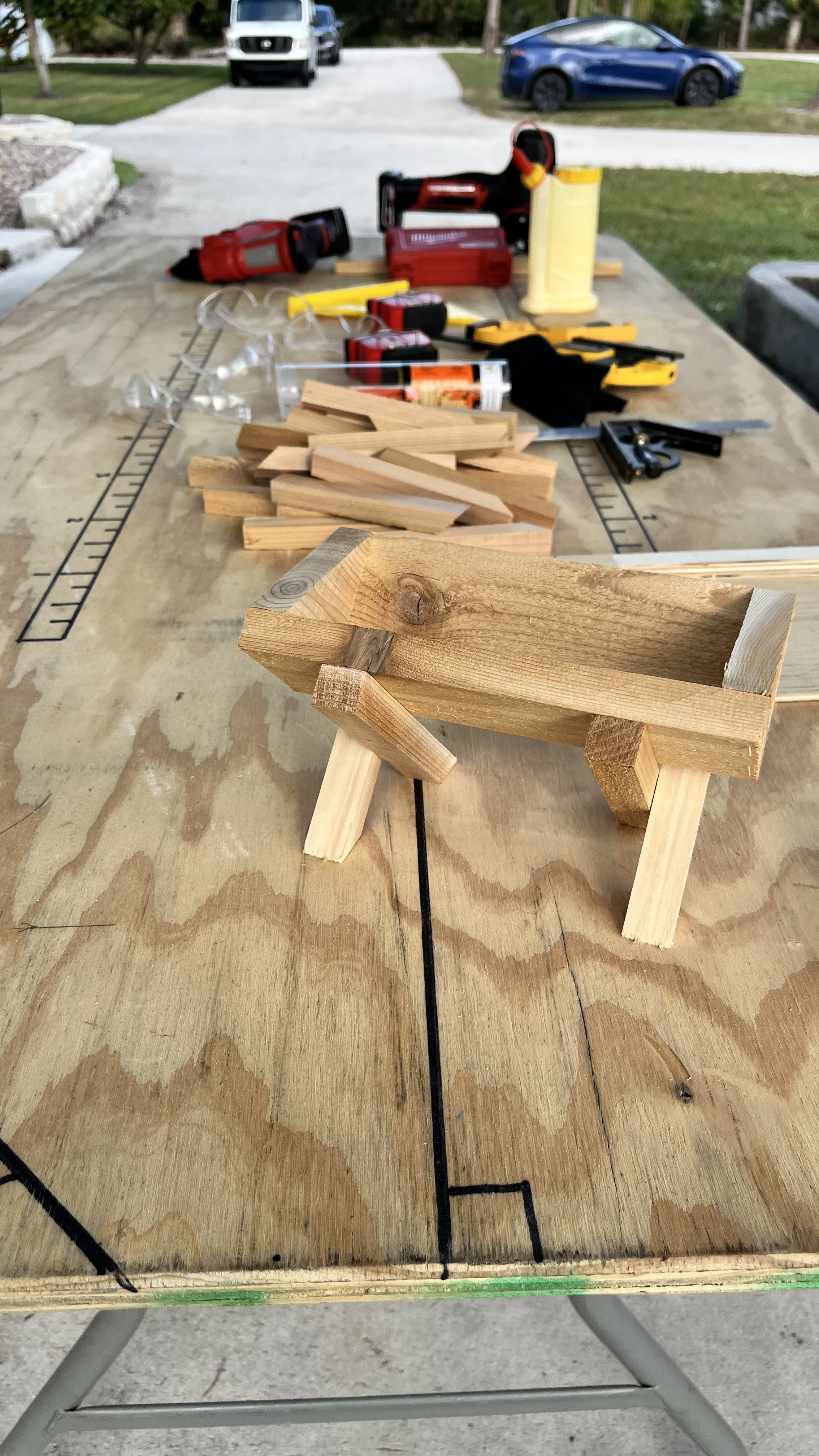
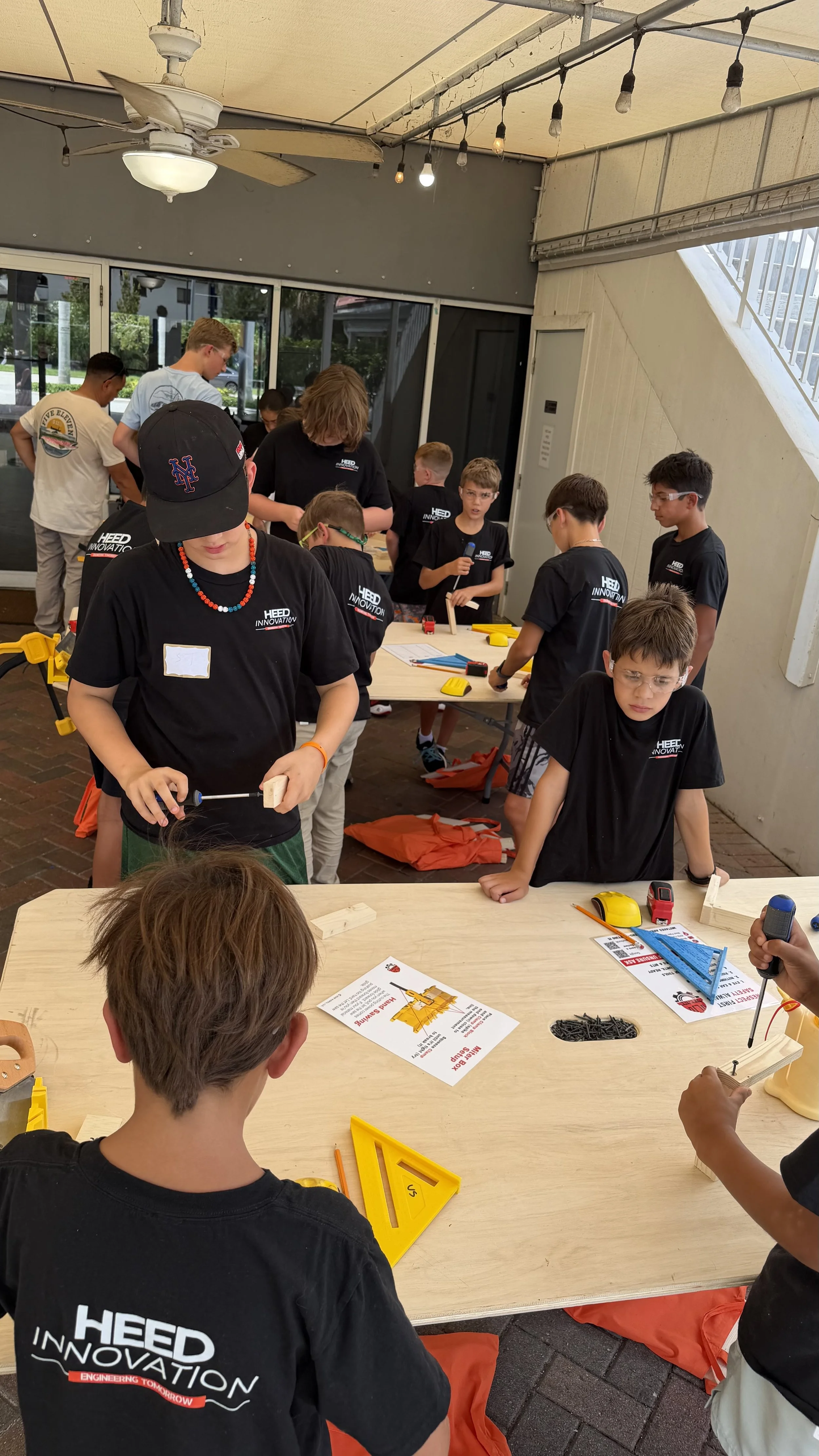
At VoSKILL, we organize classes around workstations. A basic station starts with a six-foot folding table and a half-inch plywood work surface that overhangs the edges by approximately four inches. That overhang matters because it gives students somewhere to secure clamps.
Each student has access to basic measuring, marking, and hand tools. Shared equipment stays organized at the workstation.
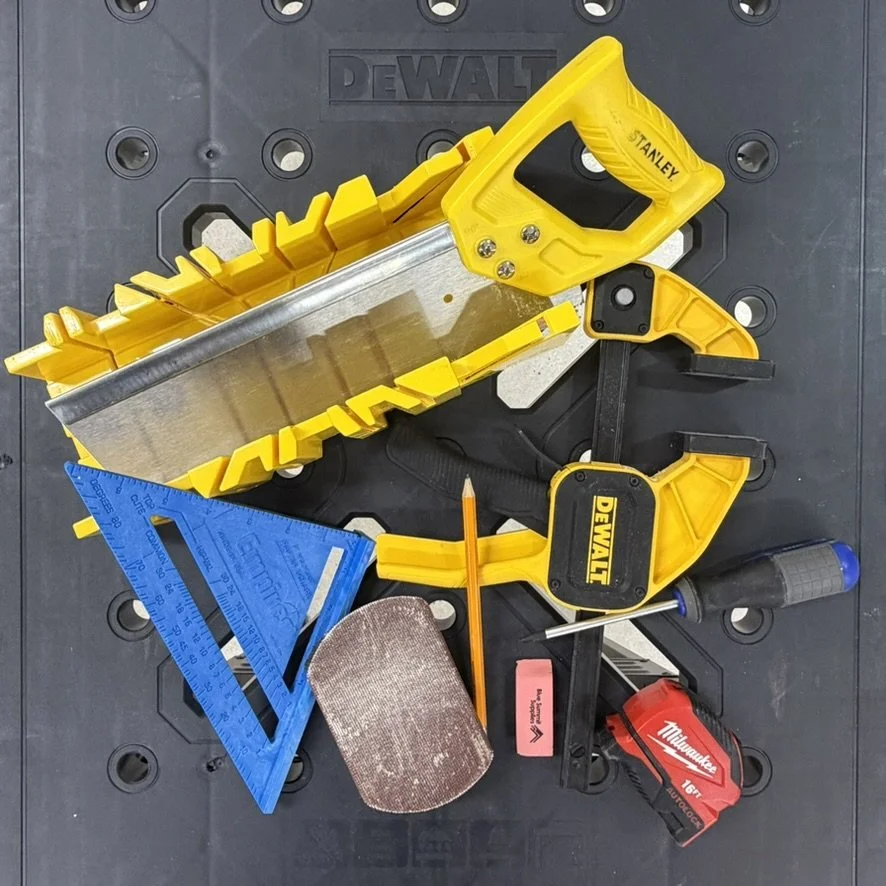
Our basic station setup includes:
Tape measures, speed squares, pencils, and screwdrivers
Sanding blocks and hand saws with miter boxes
Clamps and scrap blocks
Eye protection and posted safety instructions
The goal isn't to build the most impressive workshop. It's to create a space where kids can work safely, instructors can supervise effectively, and tools are easy to find.
The lesson: Build your setup around how you're going to teach, not around how many tools you can afford.
Teaching Kids Is Different From Teaching Adults
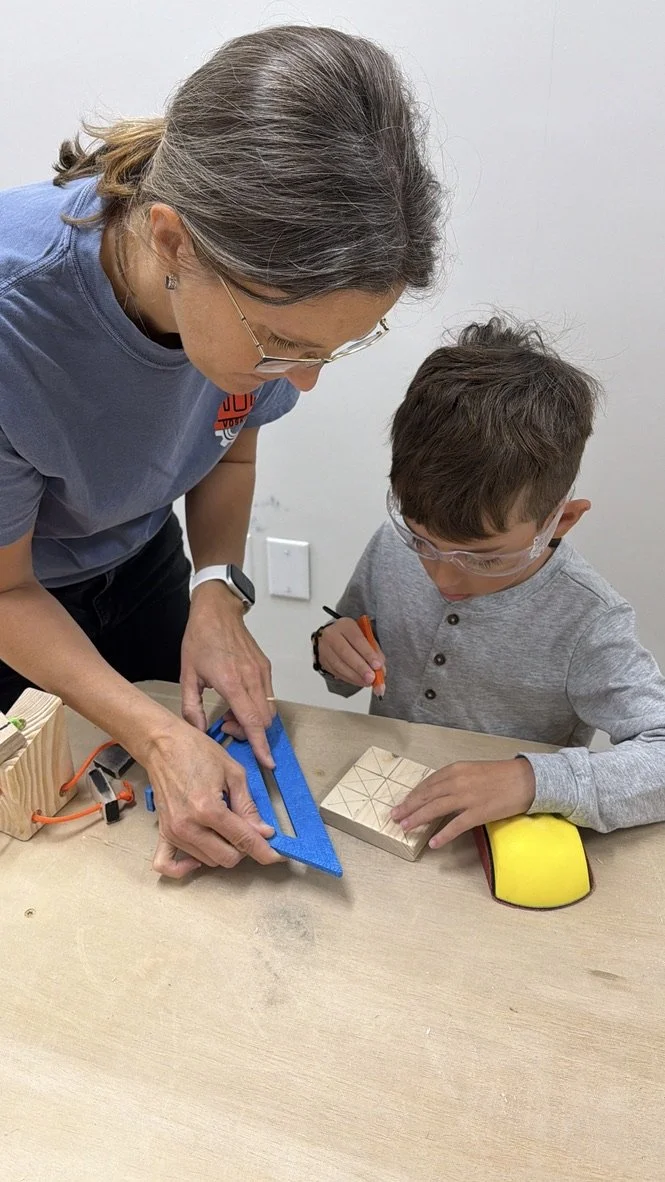
Adults generally understand why they're learning something. Kids need to see it, touch it, and try it.
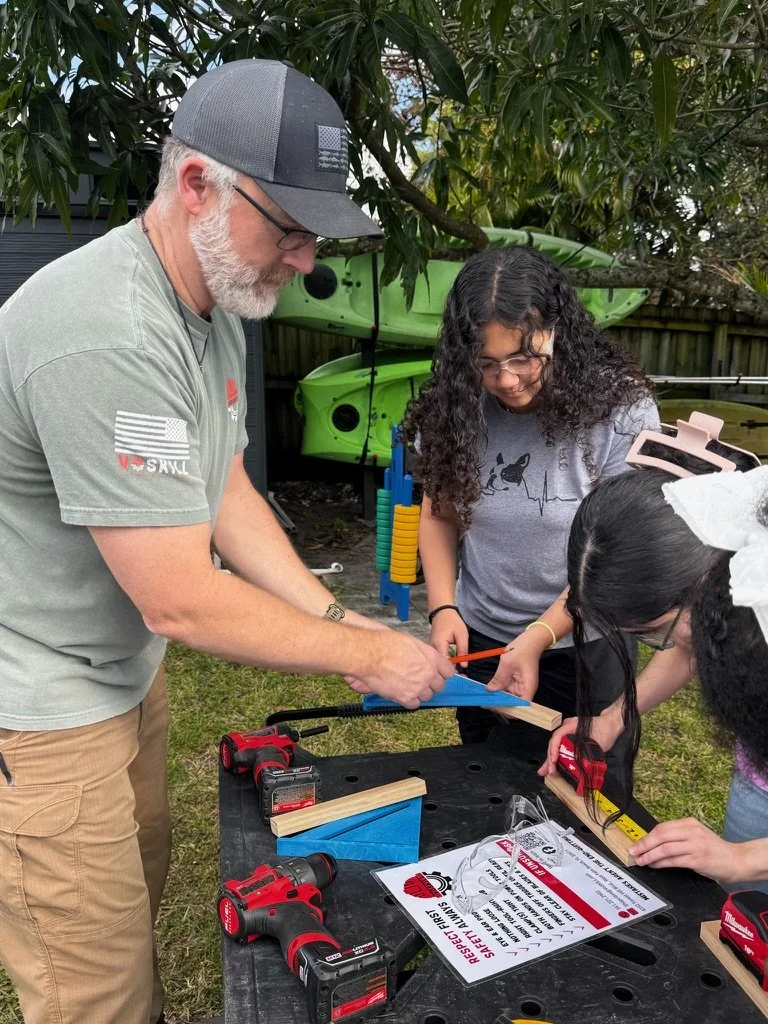
At VoSKILL, we begin by introducing the tools, reviewing safety expectations, and showing students the finished project. Then we break the project into manageable steps.
Measure. Mark. Cut. Sand. Join. Assemble.
One of the most valuable lessons we teach happens in the first few minutes: reading a tape measure.
Something as simple as asking a student to find seven inches can tell you a lot about their experience. We work through the measurements together before anyone starts cutting.
The important thing is to let kids do the work. They'll make mistakes. They'll cut something incorrectly. They'll need another piece of wood.
That's part of learning.
Your job isn't to prevent every mistake. It's to create an environment where students can recognize mistakes, correct them, and keep going.
Safety Needs to Be Part of the Class, Not a Lecture
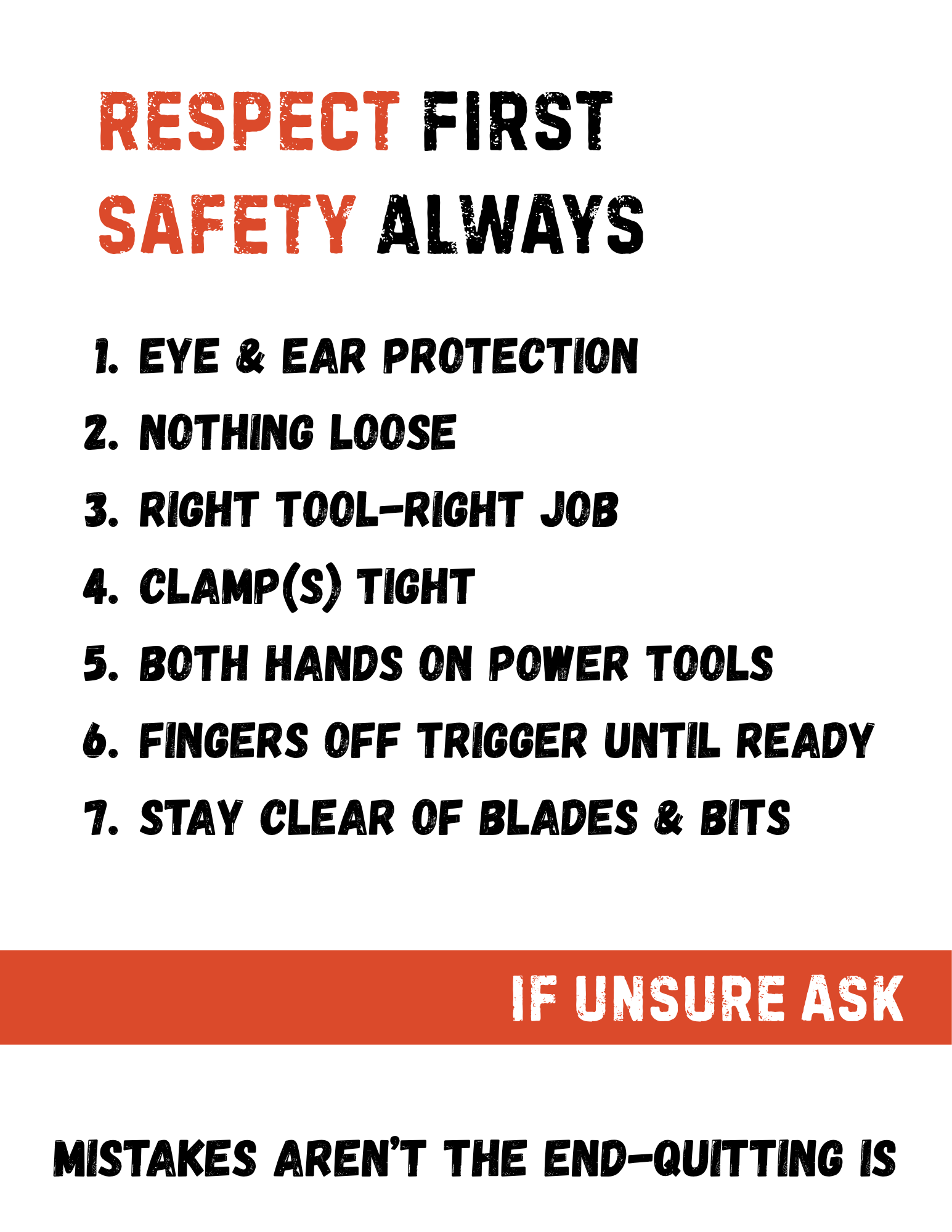
Our rule at VoSKILL is simple:
Respect First. Safety Always.
Safety starts before students touch a tool. We introduce expectations, have students participate in reviewing the rules, and reinforce those expectations throughout the class.
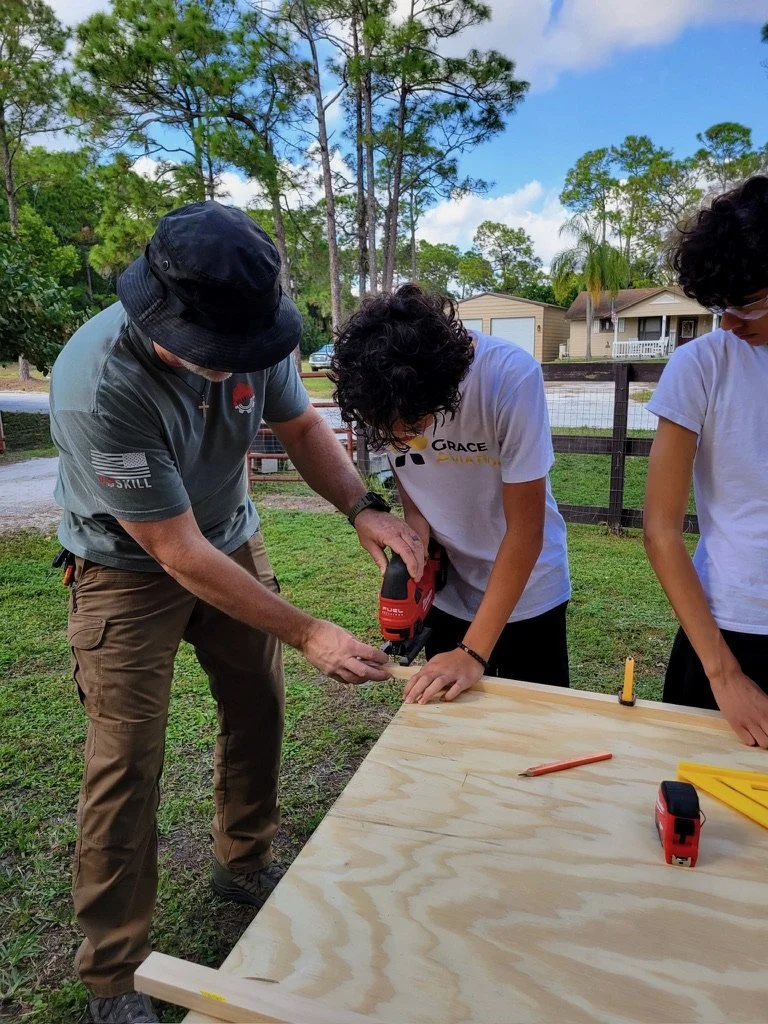
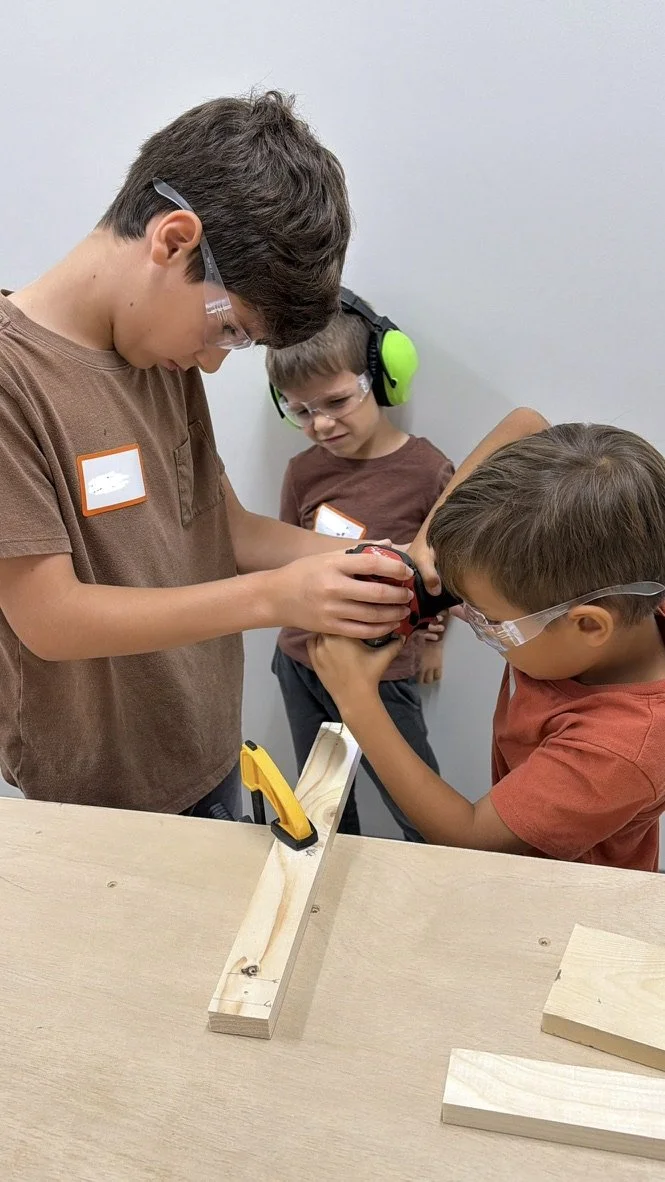
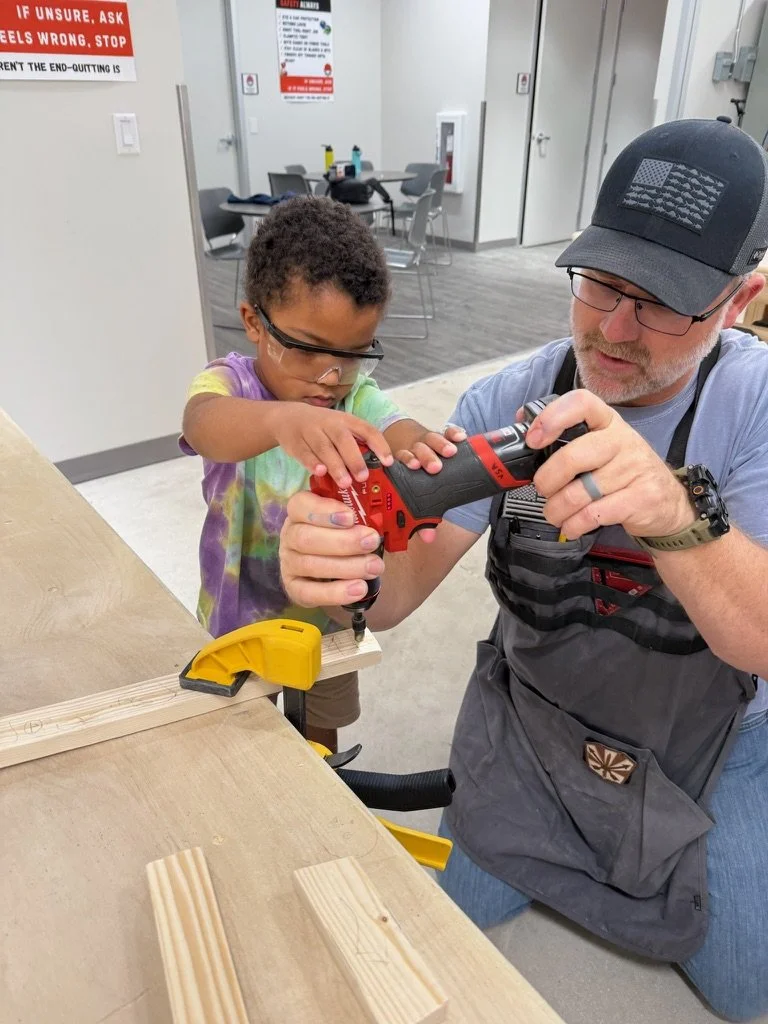
We also use a Builder and Shop Safety pairing system for certain power-tool activities. One student operates the tool while the other observes from a safe position. Then they switch.
This gives students a responsibility beyond completing their own project.
The specific tools, age groups, supervision requirements, and safety procedures matter. You need to establish those before teaching your first class.
Don't assume that because you've used a tool for twenty years, you automatically know how to teach a ten-year-old to use it safely.
The Secret to Managing a Room Full of Kids
Here's something you learn quickly: not every kid works at the same speed.
Some will finish a step immediately. Others will need several demonstrations. A few will be convinced they already know everything.
Your class needs a rhythm.
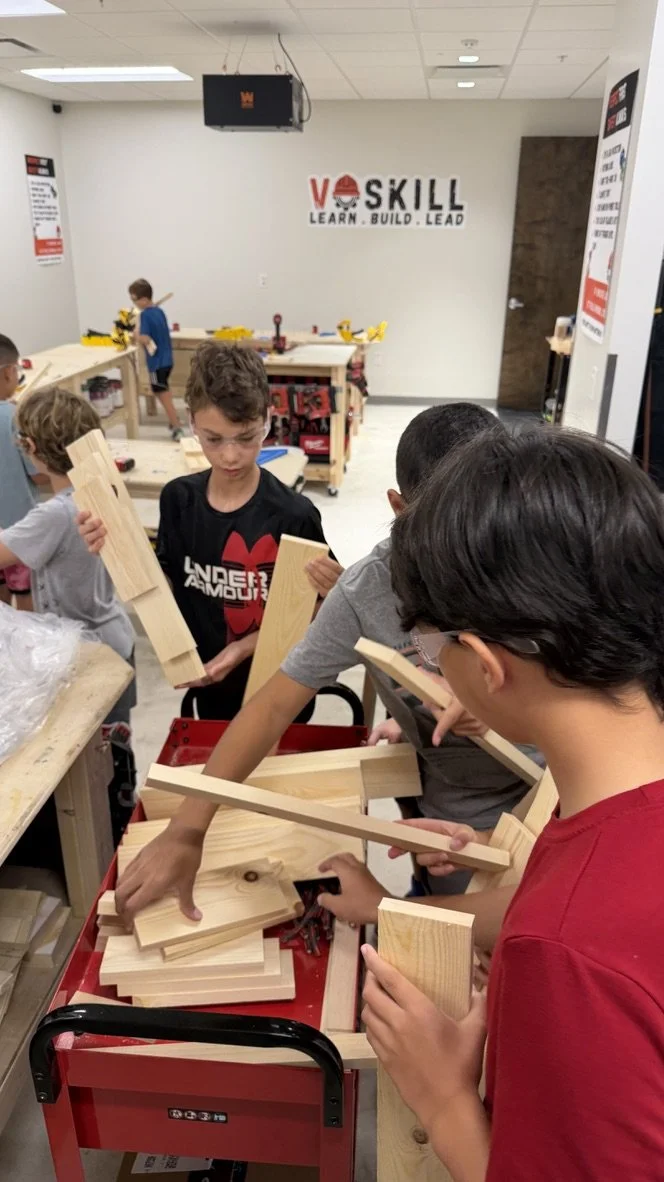
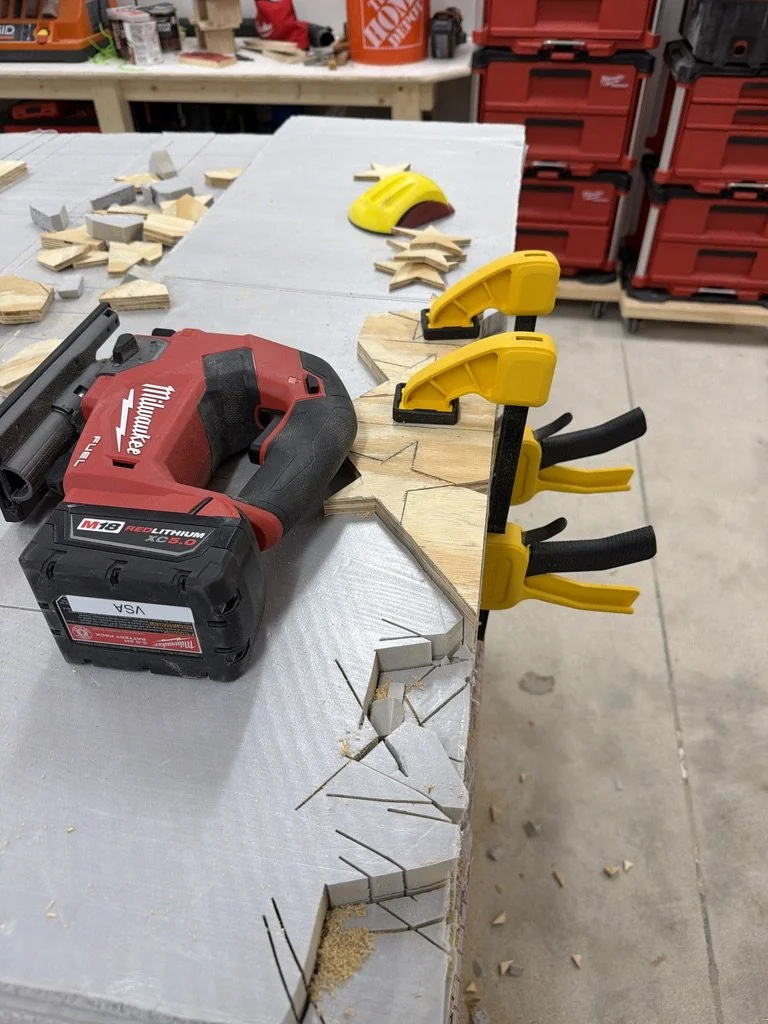
At VoSKILL, we move students through the same general building stages while allowing for different abilities. Sanding is particularly useful because students who finish early can continue improving their projects while others catch up.
We also encourage students who finish a task to help someone who's struggling.
That teaches patience, communication, and responsibility while keeping everyone engaged.
A successful class isn't one where every kid finishes first. It's one where every kid gets to do the work.
Preparation Makes or Breaks Your Class
Most of the work happens before the students arrive.
You need a project appropriate for the age group, enough materials for everyone, organized tools, a class roster, and a plan for setup and cleanup.
At VoSKILL, we generally choose projects about a week ahead, prepare materials in advance, and organize everything before class day.
We also bring extra materials.
If you're teaching six kids, don't bring exactly six project kits. Someone will make a bad cut, drill in the wrong place, or need to start a piece again.
Having replacement materials ready keeps the class moving and prevents a mistake from becoming a bigger problem than it needs to be.
How Much Should You Charge for Shop Classes?
This is where teaching becomes a business.
You need to account for more than the two hours students spend building.
There's material preparation, equipment, transportation, setup, cleanup, insurance, administration, and the time you spend communicating with parents.
At VoSKILL, we've learned to think about pricing per student while establishing minimum class requirements that protect the time and resources involved.
Mobile classes are particularly important to price correctly. Driving across town to teach five kids can require nearly the same preparation as teaching twelve.
Your prices will depend on your market, costs, class format, and the value you're providing.
Don't simply look at what another instructor charges and copy their number.
Understand your costs first.
Where Do You Find Your First Students?
You probably don't need a large advertising budget to get started.
Some of VoSKILL's earliest opportunities came from local community connections and homeschool families.
Parents are constantly looking for meaningful activities that get their kids learning something beyond a screen.
Homeschool co-ops, private schools, churches, community organizations, and parent groups can all be places to introduce your classes.
One opportunity worth exploring is private group events, including birthday parties. They can give you a chance to teach an entire group without having to recruit every student individually.
Start by talking to people in your community. Find out what families are looking for and whether they're interested in the type of class you want to offer.
Don't Overlook Schools, Organizations, and Scholarships
Individual registrations aren't the only way to operate.
Schools, homeschool co-ops, community organizations, and other groups may be interested in bringing hands-on shop classes to their students.
Depending on your location, education scholarship programs may also help eligible families pay for classes.
These opportunities come with their own requirements, so research the rules and approval processes before promising that funding will be available.
Building relationships with organizations can help you reach more students while reducing the need to find every customer individually.
You Don't Have to Figure Everything Out Before Starting
When I started VoSKILL, I didn't have every detail worked out. Our first booking came from a local community post without a complete website, published schedule, or polished business plan.
We learned by doing.
I still change things when I find a better way.
If you're comfortable using tools, enjoy working with kids, and are willing to learn the business side, you may already have more of what you need than you think.
Start with a manageable class. Teach a project you know well. Pay attention to what works, fix what doesn't, and improve the process each time.
The important thing is to start with a plan that puts safety and the students first.
Want the complete system?
The Shop Class Blueprint
I've taken the systems, projects, checklists, teaching methods, pricing approaches, and lessons we've developed at VoSKILL and organized them into the Shop Class Blueprint.
It includes nine guides covering tools and workstations, 10+ project plans, teaching classes, operations, classroom materials, pricing, finding students, business contracts, and funding sources.
It's the resource I wish I'd had when I started.
You Don’t Have to Figure This Out From Scratch.
The Shop Class Blueprint is the system I built while starting and running youth shop classes at VoSKILL.
It walks you through the same things I had to figure out myself: what tools to buy, how to set up workstations, what to charge, where to find students, how to teach a class, what projects to use, how to stay organized, and what changes when you move from mobile classes into your own space.
One-time purchase. Includes the complete Shop Class Blueprint.
I Built the Guide I Wish I Had.
When I started VoSKILL, I knew how to use tools. That wasn't the hard part.
The hard part was figuring out how to turn that knowledge into a shop class parents would actually pay for.
How many tools do I need? What should I charge? Where do I find students? How do I teach 10 kids at once without creating chaos? What projects work? How much material do I prep? Do I need a trailer? When does getting my own space make sense?
I learned most of it by doing it, screwing some of it up, fixing it, and trying again.
The Shop Class Blueprint puts those lessons in one place so you don't have to start with a blank sheet of paper.
What’s In It?
01 — Tools & Workstations
What do you actually need to get started? This guide covers the tools, equipment, and workstation setup I use for VoSKILL shop classes, including how I organize everything so multiple kids can work safely without buying a shop full of unnecessary equipment.
02 — Project Plans Library (10+)
Projects you can actually use in your classes. The library includes 10+ shop projects designed for kids, with the information you need to prep materials, teach the build, and keep the class moving. Use them as-is or as a starting point for your own projects.
03 — How to Teach a Class
Knowing how to use tools and knowing how to teach a group of kids are two different things. This guide walks through how I structure a class, introduce tools, demonstrate each step, manage different skill levels, and keep kids working safely without doing the project for them.
04 — Operations, Prep & Setup Checklists
The class is only part of the job. This guide covers the behind-the-scenes systems I use to prep materials, organize tools, set up workstations, run the class, and pack everything back up so I’m not reinventing the process every time.
05 — Posters & Classroom Materials
Ready-to-use materials for the shop and classroom. These help reinforce safety, tool knowledge, expectations, and the things you’ll find yourself explaining over and over again once you start teaching.
06 — Pricing Classes & One-Offs
How do you decide what to charge? I walk through how I think about pricing regular classes, mobile classes, private groups, and one-off events, including the costs and time that are easy to overlook when you’re figuring out whether a class actually makes sense.
07 — Finding Students & Homeschool Communities
You don’t need thousands of followers to fill a shop class. This guide covers how I found my first students, connected with local homeschool communities, and got VoSKILL in front of parents who were already looking for hands-on opportunities for their kids.
08 — Getting Business Contracts
Parents aren’t your only potential customers. Schools, co-ops, organizations, and other groups can bring you an entire class at once. This guide covers how I approach those opportunities, what they need from you, and how to turn a conversation into a paid shop class.
09 — Scholarships & Funding Sources
Not every class has to be paid for directly by the parent. This guide covers the scholarship and funding opportunities I’ve worked with and what I’ve learned about getting set up so eligible families and organizations can use those funds for shop classes.
You Don’t Have to Figure This Out From Scratch.
The Shop Class Blueprint is the system I built while starting and running youth shop classes at VoSKILL.
It walks you through the same things I had to figure out myself: what tools to buy, how to set up workstations, what to charge, where to find students, how to teach a class, what projects to use, how to stay organized, and what changes when you move from mobile classes into your own space.
One-time purchase. Includes the complete Shop Class Blueprint.
I Built the Guide I Wish I Had, Plus a 1 Hour Deep Dive Call with Mike.
When I started VoSKILL, I knew how to use tools. That wasn't the hard part.
The hard part was figuring out how to turn that knowledge into a shop class parents would actually pay for.
How many tools do I need? What should I charge? Where do I find students? How do I teach 10 kids at once without creating chaos? What projects work? How much material do I prep? Do I need a trailer? When does getting my own space make sense?
I learned most of it by doing it, screwing some of it up, fixing it, and trying again.
The Shop Class Blueprint puts those lessons in one place so you don't have to start with a blank sheet of paper.
What’s In It?
01 — Tools & Workstations
What do you actually need to get started? This guide covers the tools, equipment, and workstation setup I use for VoSKILL shop classes, including how I organize everything so multiple kids can work safely without buying a shop full of unnecessary equipment.
02 — Project Plans Library (10+)
Projects you can actually use in your classes. The library includes 10+ shop projects designed for kids, with the information you need to prep materials, teach the build, and keep the class moving. Use them as-is or as a starting point for your own projects.
03 — How to Teach a Class
Knowing how to use tools and knowing how to teach a group of kids are two different things. This guide walks through how I structure a class, introduce tools, demonstrate each step, manage different skill levels, and keep kids working safely without doing the project for them.
04 — Operations, Prep & Setup Checklists
The class is only part of the job. This guide covers the behind-the-scenes systems I use to prep materials, organize tools, set up workstations, run the class, and pack everything back up so I’m not reinventing the process every time.
05 — Posters & Classroom Materials
Ready-to-use materials for the shop and classroom. These help reinforce safety, tool knowledge, expectations, and the things you’ll find yourself explaining over and over again once you start teaching.
06 — Pricing Classes & One-Offs
How do you decide what to charge? I walk through how I think about pricing regular classes, mobile classes, private groups, and one-off events, including the costs and time that are easy to overlook when you’re figuring out whether a class actually makes sense.
07 — Finding Students & Homeschool Communities
You don’t need thousands of followers to fill a shop class. This guide covers how I found my first students, connected with local homeschool communities, and got VoSKILL in front of parents who were already looking for hands-on opportunities for their kids.
08 — Getting Business Contracts
Parents aren’t your only potential customers. Schools, co-ops, organizations, and other groups can bring you an entire class at once. This guide covers how I approach those opportunities, what they need from you, and how to turn a conversation into a paid shop class.
09 — Scholarships & Funding Sources
Not every class has to be paid for directly by the parent. This guide covers the scholarship and funding opportunities I’ve worked with and what I’ve learned about getting set up so eligible families and organizations can use those funds for shop classes.